From Mending Basket to Modern Wardrobe
From mending basket to modern wardrobe, trace how household clothing care changed and learn how to judge a garment, choose a repair and keep useful clothes in wear.
The common mistake with a damaged garment is to treat replacement as the only sensible answer. That can cost a much-loved item its useful place in the wardrobe, while an unsuitable repair can waste time and leave it less wearable. The story of the mending basket and the modern wardrobe is not a simple march from thrift to convenience; it reflects changing access to clothes, changing household skills and changing ideas of value.
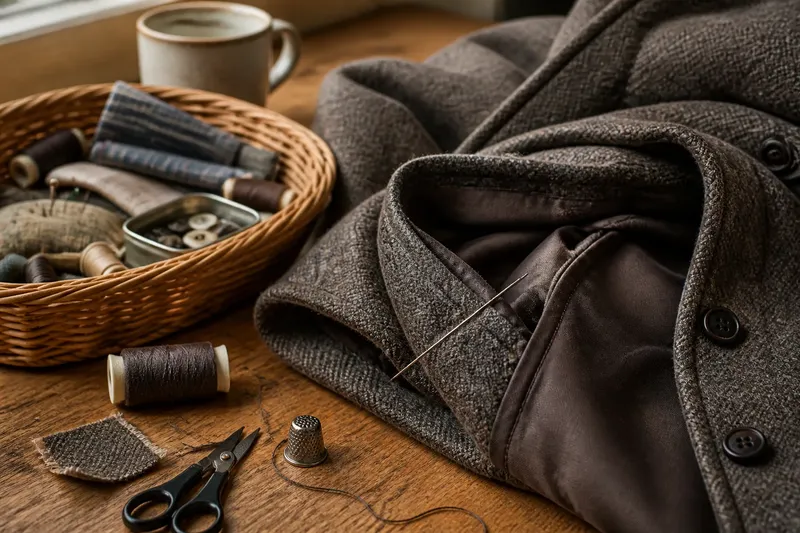
For generations, many households kept needles, thread, spare buttons and fabric scraps close at hand because clothing could be costly to replace or made to fit a particular person. A mending basket, tin or drawer gathered small jobs between wears. Repair was practical work, but it also involved judgement: a loose button was different from worn cloth across a whole panel.
The household mending basket
Household repair often began with small, visible faults. A button could be sewn back before it disappeared. A seam could be secured before the opening spread. A patch might cover a hole or reinforce a place worn by repeated rubbing. The basket was less a symbol of a perfect household than a convenient store of tools and unfinished tasks.
Clothing carried several kinds of value. The cloth and the labour that made it mattered, as did fit, comfort and familiarity. A garment tailored to one person could be difficult to replace with a ready-made alternative. Mending kept it useful, but it did not make every repair worthwhile: fabric already thinning over a broad area might fail again beside the stitches.
Changing clothes and skills
As ready-made clothing became easier to obtain, households had more choice between repair and replacement. A person could buy another garment, mend a simple fault at home, or ask a tailor or alterations shop to handle work requiring specialist skills. These options did not arrive everywhere at once, and they did not erase older habits. They changed the balance between the cost of a garment, the time available for repair and the effort needed to keep it wearable.
The mending basket changed, too. Some homes kept sewing supplies for buttons and loose seams; other people relied on a local repairer, learnt only a few basic fixes, or bought clothes with no intention of altering them. The modern wardrobe may contain more ready-made choices, but the old question remains: will this repair return the garment to a useful place in daily life?
Price is only part of the answer. Fit, comfort, frequency of wear and personal attachment matter as well. A plain cardigan worn often may be a better repair candidate than an expensive jacket that never leaves its hanger. Sentiment can count, but it cannot make fragile cloth sound again.
Judging a coat repair
Say Leah finds a split at the pocket seam of a wool coat she wears on wet walks. The coat still fits, and she wants to keep using it. She turns it inside out and checks the seam allowance, the outer cloth beside the opening and the lining. The seam has separated, but the cloth around it looks intact; the lining is not caught in the split. That makes the fault more suitable for a simple repair than a tear through the coat fabric would be.
She has three options: leave the pocket unused for now, ask a clothing repairer to assess it, or sew the seam herself if she is comfortable working on this construction. She chooses the last option only after confirming that the seam edges align without pulling and that she can reach the seam allowance without disturbing the lining. Using a needle and thread suited to the cloth, she closes the opening along the existing seam line with small, even stitches. She avoids drawing the thread tight, then checks that the lining is free, the pocket opens smoothly and the coat hangs without puckering.
This is not a template for every wool coat. Construction varies: a lining may be attached in a way that makes access awkward, the seam allowance may be narrow, or the outer fabric may be weak around the damage. If the cloth is fraying, the opening crosses a shaped or load-bearing seam, or the lining and outer fabric are both damaged, a tailor or clothing repair service can assess the garment before more stitching is attempted. Follow the care label and any maker’s instructions.
Repair choices
- Check whether the fault is confined to a seam; if the cloth itself is intact and the edges meet naturally, consider a simple seam repair, otherwise ask a repairer to assess it.
- Check the cloth beside the damage for thinning or fraying; if it is firm, a repair may hold the area together, otherwise avoid stitching into weak fabric and seek another repair method.
- Check whether the lining blocks access; if it moves clear without strain, a careful hand repair may be possible, otherwise leave the construction intact and consult a tailor.
- Check whether the garment still fits and suits your routine; if you expect to wear it, compare home repair with professional help, otherwise consider passing it on or reusing sound material.
- Check whether the repair would affect a visible part of the garment; if a visible patch suits your taste and the fabric, it can be an option, otherwise ask about a less visible method.
- Check for fresh strain after wearing the repaired garment; if the seam stays flat and the cloth remains sound, continue ordinary care, otherwise stop using the affected area and seek a different repair.
Questions about mending?
Can I mend a wool coat at home?
A small split in an accessible seam may be manageable if the surrounding cloth is sound and the lining does not complicate access. For a tear in the outer fabric, a damaged lining or a shaped seam, ask a clothing repairer to assess the construction.
How do I choose between repair and replacement?
Consider the garment’s condition, fit, comfort and likely use, alongside the skill and time the repair requires. If it will return to regular wear and the fault is manageable, repair may make sense; if the fabric is failing in several places, replacement or reuse may be more practical.
What makes a repair harder?
Weak cloth, hidden lining, shaped seams and damage near areas under strain can complicate a repair. Do not force a needle through fabric that is already splitting; a repairer can suggest whether reinforcement, alteration or another approach is suitable.
What can I do with an unwearable garment?
Sound sections may suit a small sewing project, while some textile collection schemes accept worn clothing for reuse or recycling. Check the recipient’s rules first, since not every collection takes every kind of fabric or damaged item.
A place in the wardrobe
After her repair, Leah checks the pocket before relying on it on another wet walk. The opening lies flat, the lining remains clear and the coat still feels comfortable. If the seam begins to strain again, she knows to stop using the pocket and ask a repairer about the cloth around it. Her decision was not simply to mend: it was to match a modest fault with a repair she could assess.
From mending basket to modern wardrobe, the useful thread is practical judgement rather than a duty to save every garment. A needle and thread suit some small jobs; a skilled repairer may be needed for others; and letting go can be sensible when the cloth or the garment’s role has changed. What is not worth the effort is turning each repair into a test of virtue. Keep the clothes that serve you, and choose a repair that respects both the material and the way it was made.